Room to operate.
Owner-controlled commercial or light-industrial properties with secure service space, safe access, and a practical path to reject heat. Sensitive occupied areas need special attention to sound and comfort.
A next chapter for qualified properties
A managed compute pod could put suitable space, connectivity, and approved electrical capacity to work at your commercial facility.
Our starting point is the home. Commercial properties are a deliberate expansion of the same idea: useful compute, careful local controls, and a clear benefit for the place that hosts it.
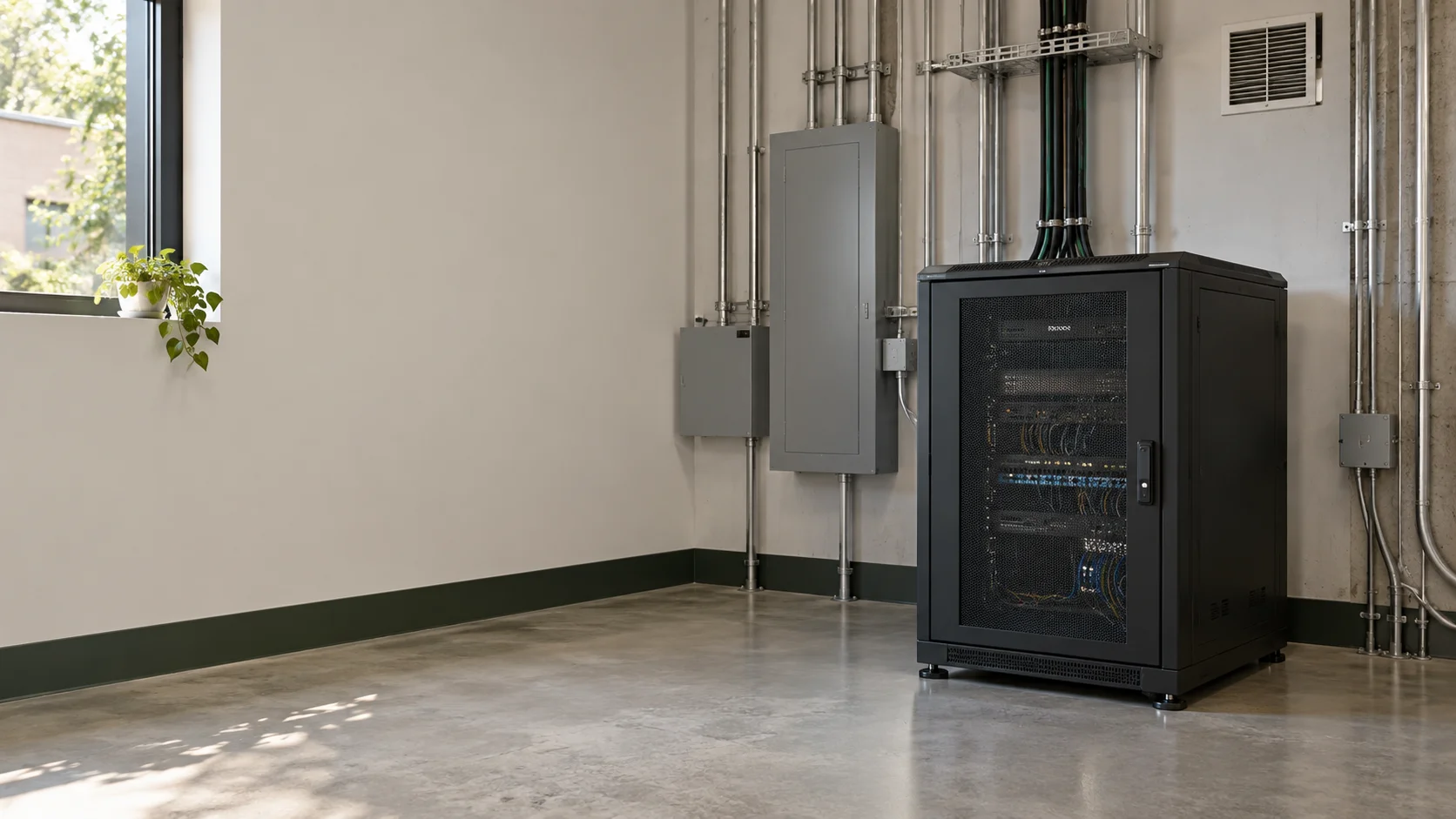
Where it could fit
We would begin with a small number of well-qualified facilities, then work toward repeatable installations across property portfolios.
Owner-controlled commercial or light-industrial properties with secure service space, safe access, and a practical path to reject heat. Sensitive occupied areas need special attention to sound and comfort.
Suitable fiber, metered electrical service, and documented capacity under the site’s actual load profile. Capacity must remain available when the pod needs it.
Facilities with steady hot-water demand may justify heat recovery. Temperature, timing, plumbing, and the displaced heating cost determine whether it earns its place.
The facility comes first
The pod is planned around the building’s essential operations. Its operating envelope sets the permitted load and the response when local conditions change.
Metering and local controls would enforce agreed limits. Eligible compute jobs can be scheduled, reduced, or paused only within the service commitments made to their buyers. Not every workload can tolerate interruption.
Existing wiring, a large service rating, or quiet overnight hours do not guarantee available utility capacity. Site and network review come before a deployment commitment.
From site survey to service
Commercial facilities have different tariffs, demand charges, access rules, and tenant obligations. The proposal should reflect yours.
Review interval demand, the tariff, electrical equipment, secure space, fiber, cooling routes, service access, and the owner’s plans for future loads. Unused panel capacity alone is not a green light.
Work with qualified electrical professionals and the utility as needed to define approved power limits, metering, demand charges, and any curtailment requirements. Model the building and pod together.
Select GPUs and suitable workloads together. Buyer requirements for security, availability, networking, and interruptions must fit the site before equipment is ordered.
Provide dedicated circuits, a secure equipment enclosure, managed connectivity, and a cooling plan. Test power limits, thermal performance, alarms, recovery, and service procedures.
Commoncopper would monitor and maintain the pod, schedule eligible workloads, and plan hardware replacement. The property team gets agreed reporting and a clear point of contact.
An agreement that works for both sides
Commercial host terms would be negotiated for the property. The residential free-charging offer is not a commercial offer.
Account for pod energy, cooling, demand charges, tariff changes, and any effects on the building’s peak. Define how the pod’s incremental costs are measured and paid.
A site fee, energy-cost offset, or other agreed benefit can be considered after full project costs and buyer demand are assessed. No standard return is promised.
Define equipment ownership, secure network separation, access, insurance, service levels, term, removal, and restoration before installation.
Set maintenance windows, escalation procedures, hardware refresh responsibilities, and a process for changing limits as the facility evolves.
Build a useful foundation
The lasting foundation is the site relationship, connectivity, metering, operating knowledge, and controls. Compute hardware can be refreshed as buyer needs evolve.
Battery storage, managed EV charging, heat recovery, or grid services could follow when the site supports them and each addition has a clear business case. None is required to make the initial proposition sound.
Commercial deployments are a development concept. No live facilities, contracted compute revenue, or utility approvals are implied.
Have a property in mind?